
There’s no single “”best”” conservatory roof replacement. Polycarbonate suits tight budgets (£2,000–£4,000), glass balances light and insulation (£3,000–£5,000), while tiled or insulated panel roofs (£4,000–£6,000) deliver the best year-round comfort and lowest noise. Your ideal choice depends on how you use the space, your budget, and how much natural light you want to keep.
Is your conservatory too cold in winter, too hot in summer, or too noisy when it rains? You’re not alone. Many homeowners with older polycarbonate or basic glass roofs find their conservatory becomes a room they avoid rather than enjoy. The good news is that you don’t need to rebuild the whole structure to fix it.
Replacing the roof is often the most practical first step toward a comfortable, usable conservatory. This guide breaks down your four main options — glass, polycarbonate, tiled, and insulated panels — so you can make a confident decision based on your budget, your priorities, and how you want to use your space.
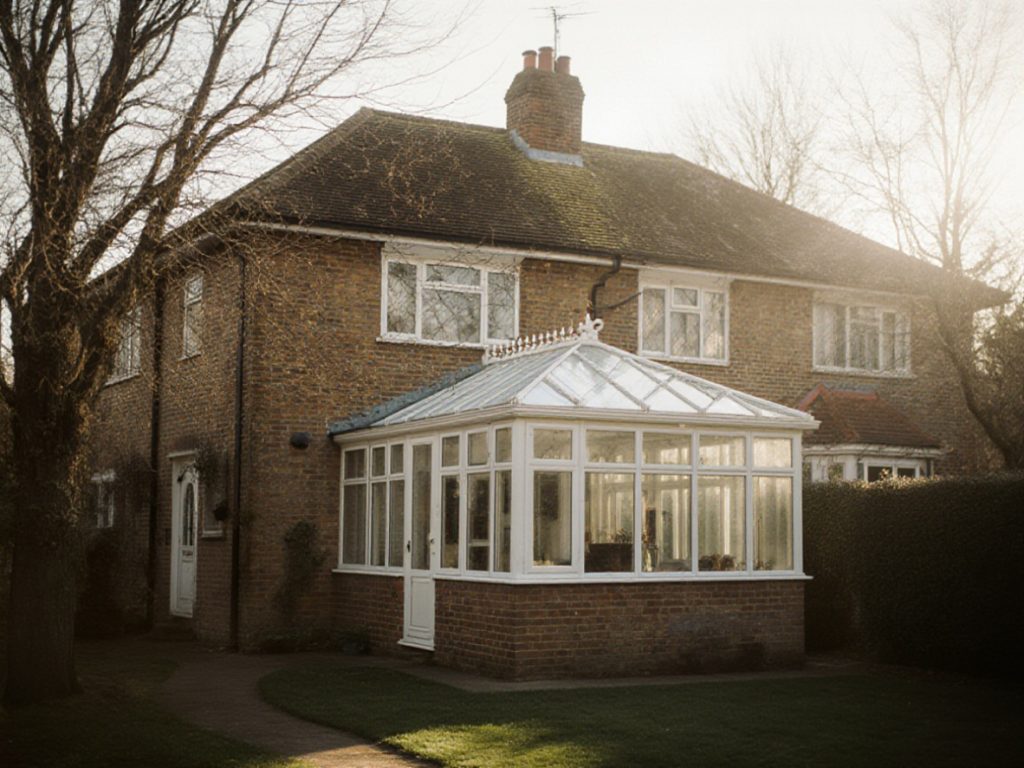
What Are Your Conservatory Roof Replacement Options?
Before comparing performance and price, it helps to know what each roof type actually is:
- Polycarbonate roofs use lightweight, multi-wall plastic sheeting. They’re the most affordable replacement option and the quickest to fit.
- Glass roofs use toughened, often solar-control glazing. They keep your conservatory bright while improving on the thermal performance of older glass.
- Tiled roofs replace glazing with lightweight tiles over a solid, insulated structure. They’re built for year-round comfort.
- Insulated panel roofs (like Ultraframe’s Livinroof) combine solid insulated panels with the option to add glazing exactly where you want it, giving you a solid roof without sacrificing all your natural light.
Glass vs Polycarbonate vs Tiled vs Insulated Panels: At a Glance
| Feature | Polycarbonate | Glass | Tiled | Insulated Panel |
|---|---|---|---|---|
| Typical cost | £2,000–£4,000 | £3,000–£5,000 | £4,000–£6,000 | £4,000–£6,000+ |
| U-value | ~1.4 W/m²K | Down to 1.0 W/m²K | 0.15–0.12 W/m²K | 0.15–0.12 W/m²K |
| Weight | ~3–3.4 kg/m² | ~30 kg/m² | 31 kg/m²+ | 31 kg/m² |
| Light transmission | High | 28%–70% (solar control) | Minimal (unless glazed) | Configurable |
| Rain noise | High (64.6 dBA) | Low (52.0 dBA) | Very low | Very low |
Source: FMB cost guide; Pilkington Suncool; BRE rain noise research
How Does Roof U-Value Affect Your Conservatory’s Comfort?
The U-value measures how much heat escapes through your roof — the lower the number, the better the insulation. This single figure explains most of the temperature complaints homeowners have about older conservatories.
- Polycarbonate typically achieves a U-value of around 1.4 W/m²K for standard 25mm multiwall sheeting. It’s workable, but heat still escapes quickly in winter.
- Glass performs significantly better with modern coatings. Suncool range achieves centre-pane U-values down to 1.0 W/m²K in an argon-filled double glazed unit, while also controlling solar heat gain.
- Tiled and insulated panel roofs lead the field, with systems like Ultraframe’s Livinroof reaching U-values as low as 0.15 or 0.12 W/m²K — well within Building Regulation requirements for a warm, usable room.
Choose glass if natural light matters more than maximum insulation. Choose tiled or insulated panels if year-round comfort is your priority.
Will a New Roof Reduce Natural Light in Your Conservatory?
Natural light is often the reason people fall in love with conservatories in the first place, so it’s worth weighing up carefully.
Glass roofs retain the most light, though the amount varies by specification. Pilkington’s solar-control glazing ranges from 70% light transmission down to 28% for higher-performance coatings, giving you a genuine choice between brightness and glare control.
Polycarbonate also allows plenty of light through, particularly in clear finishes, though it can’t match glass for clarity.
Solid tiled roofs block the most light by default, but this doesn’t mean you have to sacrifice brightness entirely. Insulated panel systems solve this by letting you insert glazed sections exactly where you need them — over a dining table or reading corner, for example — while keeping the insulation benefits everywhere else.
Does Roof Weight Affect Your Conservatory’s Structure?
Swapping a lightweight roof for a heavier one isn’t always a simple like-for-like job, and it’s one of the most important practical checks before you commit.
- Polycarbonate is by far the lightest option, at roughly 3–3.4 kg/m².
- Glass roofs weigh considerably more, at around 30 kg/m².
- Insulated panel systems like Livinroof come in at approximately 31 kg/m² including plasterboard — similar to glass, and often light enough to sit on your existing frames.
Because the Planning Portal treats conservatories under similar rules to extensions, replacing a lightweight glazed roof with a solid one can also trigger Building Regulations requirements that didn’t apply to your original conservatory. Always get your existing frames and base checked before ordering a heavier roof.
Which Conservatory Roof Is Quietest in the Rain?
If rain noise has ever driven you out of your conservatory mid-storm, you’re dealing with a well-documented problem. Research by the Building Research Establishment confirms that lightweight roofing materials can significantly raise indoor noise levels during heavy rainfall.
Their laboratory testing measured sound intensity levels of 64.6 dBA for polycarbonate roofing, compared with just 52.0 dBA for laminated glass — a noticeable difference in everyday comfort. Solid tiled and insulated panel roofs perform best of all, since their dense construction absorbs impact noise far more effectively than glazing alone.
Choose a solid or insulated roof if rain noise is a dealbreaker for you.
How Much Maintenance Does Each Roof Type Need?
- Polycarbonate can discolour, become brittle, or develop algae over time, and panels may need replacing sooner than other options.
- Glass is easy to keep clean, especially with self-cleaning coatings, and holds up well for decades with minimal attention.
- Tiled and insulated panel roofs need the least ongoing maintenance. Once installed, they behave much like the rest of your roofline.
What Affects Conservatory Roof Replacement Costs?
According to the Federation of Master Builders, typical costs break down as follows:
- Polycarbonate: £2,000–£4,000 — the most budget-friendly like-for-like replacement.
- Glass: £3,000–£5,000 — depending on size and glazing specification.
- Tiled or solid: £4,000–£6,000 — reflecting the added insulation, structural checks, and internal finishing involved.
Costs can rise with larger roof areas, difficult access, a poor existing base, or higher-spec finishes. Budget for a contingency, and always confirm whether quotes include VAT and Building Control fees.
Which Roof Type Suits You?
- On a tight budget and just need to stop a leak? Polycarbonate gets the job done affordably.
- Want to keep the bright, airy feel of your conservatory while improving comfort? A modern solar-control glass roof strikes that balance.
- Planning to use the room year-round as a proper living space? A tiled or insulated panel roof gives you the best thermal performance and the quietest rainy days.
- Want the best of both worlds — solid insulation with light exactly where you want it? An insulated panel system with integrated glazing is worth the extra investment.
Your Conservatory Roof Decision Checklist
Before you request quotes, run through this checklist:
- [ ] Have you identified your main pain point — heat loss, overheating, noise, or leaks?
- [ ] Do you know your budget range for a like-for-like or upgraded roof?
- [ ] Has your existing structure been checked for its ability to support a heavier roof?
- [ ] Have you confirmed whether Building Regulations apply to your project?
- [ ] Do you know how much natural light you’re willing to trade for better insulation?
- [ ] Have you asked at least three installers for quotes on the same specification?
Frequently Asked Questions
Do I need planning permission to replace my conservatory roof? Usually not, if your conservatory falls within permitted development rules — broadly, under 4 metres high, not extending more than 6 metres from an attached house, and not covering more than half your garden. However, rules vary by property, so it’s worth checking the Planning Portal before starting work.
Do Building Regulations apply to a roof replacement? They can. A conservatory is normally exempt from Building Regulations if it’s separated from the house by external-quality doors and heated independently. Swapping a lightweight glazed roof for a solid one may bring your project back under Building Regulations, since the structure needs to support the extra weight.
Is a tiled roof always better than glass or polycarbonate? Not necessarily. Tiled and insulated panel roofs offer the best thermal performance and lowest noise, but they reduce natural light unless you add glazed sections. If light matters most to you, glass may suit your needs better.
How long does a conservatory roof replacement take? Straightforward polycarbonate or glass replacements can often be completed in a day or two. Solid or insulated panel roofs typically take longer due to structural checks and internal finishing work.
Can I add glazing to a solid conservatory roof? Yes. Systems like Ultraframe’s Livinroof let you integrate glazed panels anywhere in the design, so you don’t have to choose between insulation and natural light.
Ready to Compare Your Options in Person?
Reading about U-values and light transmission only gets you so far — the right choice depends on your specific conservatory, its orientation, and how you want to use the space. A roof assessment takes the guesswork out of the decision, giving you tailored recommendations and an accurate quote based on your existing structure. Request your free roof assessment today and take the first step toward a conservatory you’ll actually want to spend time in.